How Long Does It Take for a Wardrobe Assembler in London to Assemble a 2-Door, 3-Door or 4-Door Wardrobe?
Buying a new wardrobe is exciting, but the thought of assembling it can be stressful. If you are looking for a reliable wardrobe assembler in London, knowing how long the job might take can help you plan your day and avoid unnecessary delays.
The good news is that most standard flat-pack wardrobes can be assembled within a few hours. However, a larger wardrobe with several doors, drawers or sliding mechanisms will usually need more time.
How Long Does Wardrobe Assembly Take?
The time depends mainly on the wardrobe’s size, design and number of components. A basic wardrobe with hinged doors is generally quicker to assemble than a large storage system with internal drawers and sliding doors.
For planning purposes, the following estimates provide a useful starting point.
2-Door, 3-Door and 4-Door Wardrobe Assembly Times
| Wardrobe Type | Estimated Assembly Time |
|---|---|
| 2-door wardrobe | 1.5–2.5 hours |
| 3-door wardrobe | 2–3.5 hours |
| 4-door wardrobe | 3–5 hours |
| Large wardrobe with sliding doors | 3–6 hours or more |
These are indicative estimates for standard flat-pack designs with straightforward access and all components available. They are not fixed manufacturer timings.
A simple 2-door wardrobe with a hanging rail and one shelf may take less time. However, a 4-door wardrobe with multiple drawers, adjustable shelving and mirrored panels can require considerably more work.
Why Does a Larger Wardrobe Take Longer?
A wardrobe is not simply a collection of doors and panels. The assembler must construct the frame, secure the back panel, fit the internal components, attach the doors and check that everything is properly aligned.
Each additional door or drawer introduces more fittings and adjustments. Sliding doors can also require extra attention to ensure their runners operate correctly.
What Affects Wardrobe Assembly Time?
Even two wardrobes with the same number of doors can take different amounts of time to assemble.
- Wardrobe Design and Brand
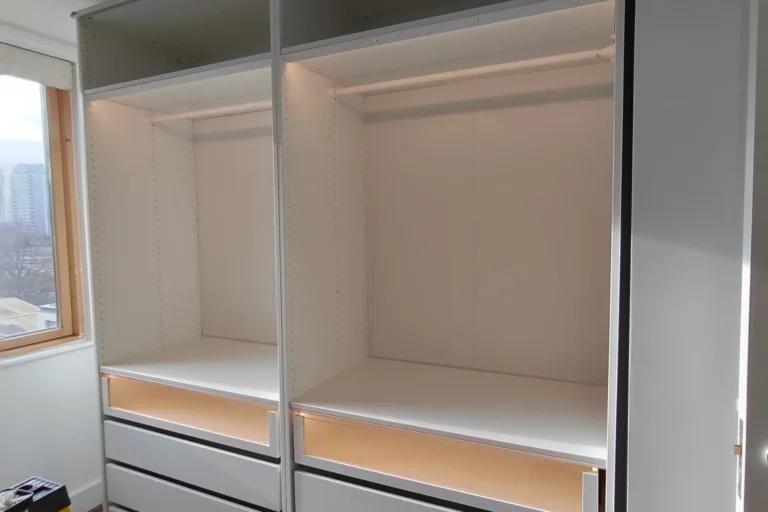
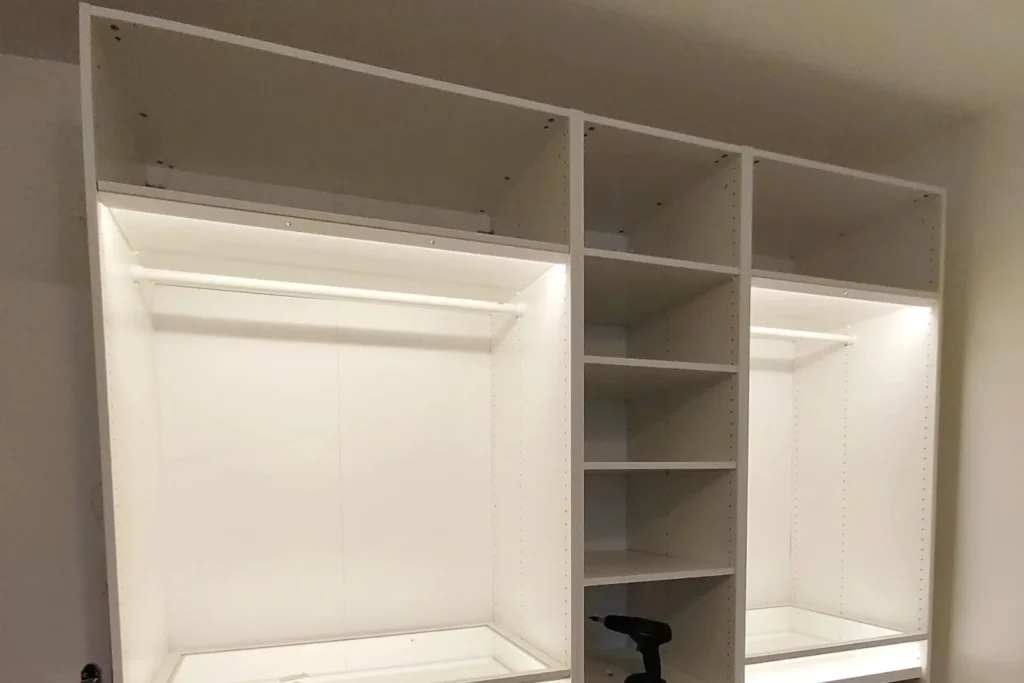
Different manufacturers use different construction methods, fittings and instructions. IKEA PAX wardrobes, for example, can have several combinations of frames, doors and internal storage accessories.
Checking the manufacturer’s assembly instructions before booking helps establish what the job involves.
- Number of Drawers and Shelves
Additional drawers, hanging rails, shoe racks and internal organisers increase the number of components that need fitting. A wardrobe with a basic hanging section is generally quicker than one with several storage compartments.
- Room Size and Available Space
A small London bedroom can make assembly more challenging. If there is limited floor space, the assembler may need to reposition panels or build the wardrobe in stages.
Low ceilings, narrow doorways and restricted access can also affect the process.
- Wall Type and Floor Condition
Uneven floors can make it harder to level a wardrobe. Wall materials also matter when fitting anti-tip restraints.
IKEA’s UK safety guidance recommends securing appropriate furniture to the wall using suitable fixings for the wall material. This is an important part of completing the installation safely.
What Happens During Professional Wardrobe Assembly?
A professional assembly job involves more than connecting panels.
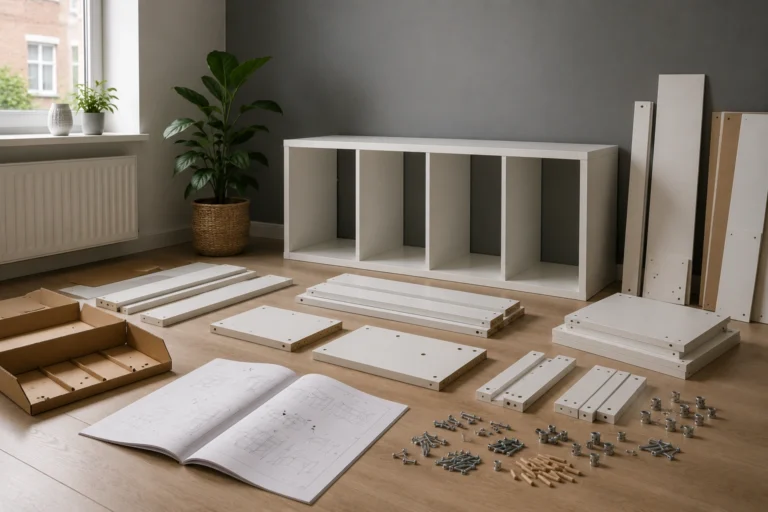
The process normally begins with checking the packaging, identifying the components and reviewing the manufacturer’s instructions.
The assembler then builds the main frame, installs the back panel and fits shelves, rails and drawers. Once the structure is complete, the doors are attached and adjusted.
The final checks include making sure the wardrobe is level, doors open properly, drawers move smoothly and the required wall restraints are fitted.
These checks matter because a wardrobe that looks finished may still have loose fittings or poorly aligned doors.
Can You Assemble a Wardrobe Yourself?
Yes, many flat-pack wardrobes are designed for home assembly. However, the difficulty increases with the size and weight of the furniture.
A small 2-door wardrobe may be manageable for someone with basic DIY experience. Larger wardrobes can be difficult to handle without assistance, particularly when raising and positioning the main frame.
The Health and Safety Executive highlights the risks associated with lifting and handling heavy or bulky loads. Planning the lifting task and using suitable assistance can reduce these risks.
If you are inexperienced, short on time or dealing with a large wardrobe, hiring a professional can be a sensible option.
How to Prepare for a Wardrobe Assembler
A little preparation can help prevent delays and make the appointment more straightforward.
First, clear the area where the wardrobe will stand. Remove existing furniture, clothing and other obstacles so there is enough room to work.
Next, check that all boxes have arrived and keep the assembly instructions available. If you have purchased additional shelves or drawers, make sure those components are present too.
It is also helpful to check the ceiling height, doorway width and available wall space before the appointment. Inform the assembler about stairs, parking restrictions or limited access in advance.
Why Choose Professional Wardrobe Installation?
Professional assembly can save time and reduce the frustration of handling complicated instructions, numerous fittings and heavy panels.
An experienced assembler can also identify missing components, check the frame’s alignment and ensure that the finished wardrobe is suitable for its intended position.
When comparing wardrobe installation services in London, ask whether the quotation covers internal fittings, door adjustments, levelling and wall attachment. Clarifying these details beforehand helps avoid misunderstandings.
Key Takeaways
A standard 2-door wardrobe may take around 1.5–2.5 hours, while a 3-door model may need 2–3.5 hours. A 4-door wardrobe can take approximately 3–5 hours, with larger sliding-door systems potentially taking longer.
The final duration depends on the design, internal fittings, available workspace, floor condition and wall-fixing requirements.
Preparing the room and checking that all components are available can help the assembler complete the job more efficiently.
If you are planning a new wardrobe installation in London, what type of wardrobe do you need assembled, and when would you like the work completed?
Frequently Asked Questions
1. How long does it take to assemble a 2-door wardrobe?
A standard 2-door wardrobe generally takes around 1.5–2.5 hours to assemble. Additional drawers, complicated fittings or restricted working space can increase the time.
2. How long does it take to assemble a 3-door wardrobe?
A typical 3-door wardrobe may take approximately 2–3.5 hours. The actual duration depends on its construction, storage compartments and door design.
3. How long does it take to assemble a 4-door wardrobe?
A standard 4-door wardrobe can take around 3–5 hours. Models with sliding doors, mirrors or several internal drawers may require additional time.
4. Can a wardrobe be assembled in one day?
Yes, most individual flat-pack wardrobes can be assembled within a single appointment. Larger fitted-style storage systems or multiple wardrobes may require a longer visit.
5. Is a 2-door wardrobe easier to assemble than a 4-door wardrobe?
Generally, yes. A 2-door wardrobe usually has fewer panels, fittings and adjustments, making the assembly process simpler than a larger 4-door model.
6. How long does IKEA PAX wardrobe assembly take?
The time depends on the number of frames, doors and internal accessories included in the PAX configuration. A basic frame is less complicated than a complete storage combination with drawers and sliding doors.
7. Do sliding-door wardrobes take longer to assemble?
They can take longer because the tracks, runners and door alignment need careful attention. Incorrectly fitted sliding mechanisms can cause doors to stick or move unevenly.
8. Does wardrobe assembly include fixing it to the wall?
Not automatically. Wall attachment should be confirmed when booking, and the correct fixings must be suitable for the wall material and manufacturer’s instructions.
9. Should I empty the room before wardrobe assembly?
You should clear the installation area and provide enough space for the panels and tools. Removing nearby furniture and obstacles makes the assembly process easier and safer.
10. Is it worth hiring a professional wardrobe assembler in London?
Professional assembly can save time and help avoid mistakes with complicated fittings, heavy panels and door alignment. It can be particularly useful for large wardrobes or installations in rooms with limited space.