The Quiet Risk of Building Heavy Flat Pack Furniture Alone
Buying a large wardrobe, bookcase, sideboard, entertainment unit or chest of drawers feels exciting until the boxes arrive at your doorstep. Suddenly, what seemed like a simple DIY project turns into hours of lifting, balancing and deciphering instructions.
Many homeowners underestimate the risks involved with building heavy flat pack furniture. What starts as a money-saving weekend task can quickly become physically demanding, unsafe and expensive if mistakes occur.
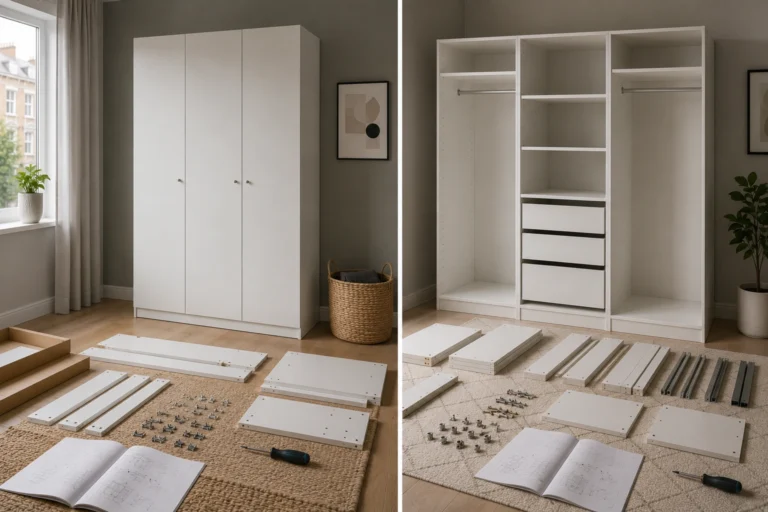
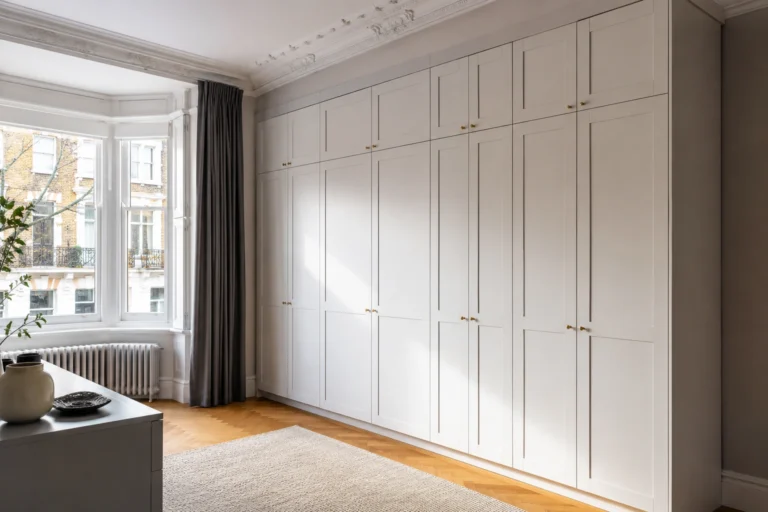
The reality is that modern flat pack furniture has become bigger, heavier and more complex than ever before. Large wardrobes can weigh well over 100kg when fully assembled, and even a small alignment error can compromise the entire structure.
If you’ve ever considered tackling a large furniture project alone, it’s worth understanding the hidden risks before opening the first box.
Why Heavy Flat Pack Furniture Is More Dangerous Than Most People Think
Flat pack furniture is designed for efficient transport, not necessarily easy assembly.
Manufacturers split furniture into dozens of heavy components, requiring careful sequencing and structural balancing during assembly.
The danger often lies in the false sense of simplicity.
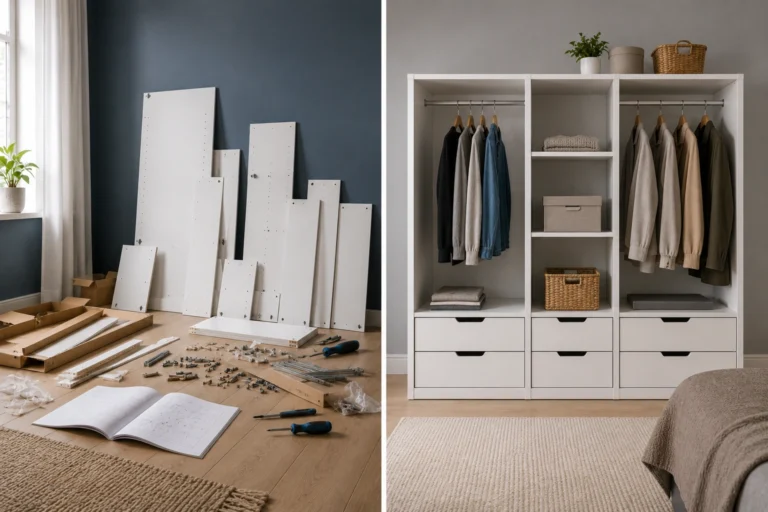
A wardrobe may arrive in three boxes, but each panel can weigh 15kg to 30kg individually. Lifting, rotating and positioning these panels alone puts considerable strain on your body.
According to the U.S. Occupational Safety and Health Administration (OSHA), musculoskeletal disorders remain one of the most common workplace injuries, with improper lifting being a significant contributor. Ergonomic handling substantially reduces these risks.
Common heavy furniture categories that carry higher risks:
| Furniture Type | Average Difficulty | Common Risks |
|---|---|---|
| Sliding Door Wardrobes | Very High | Panel collapse, track misalignment |
| Large Bookcases | High | Tip-over hazards |
| Entertainment Units | High | Weight imbalance |
| Office Desks | Medium-High | Incorrect frame support |
| Chest of Drawers | High | Stability issues |
| Wall Units | Very High | Wall anchoring errors |
The Biggest Mistakes People Make When Building Alone
1. Underestimating the Weight
Many people assume each component is manageable.
However, assembled wardrobes often exceed 100kg.
When lifting long panels without assistance, the leverage effect increases strain on your lower back and shoulders.
The problem isn’t simply weight.
It’s controlling awkward dimensions while maintaining balance.
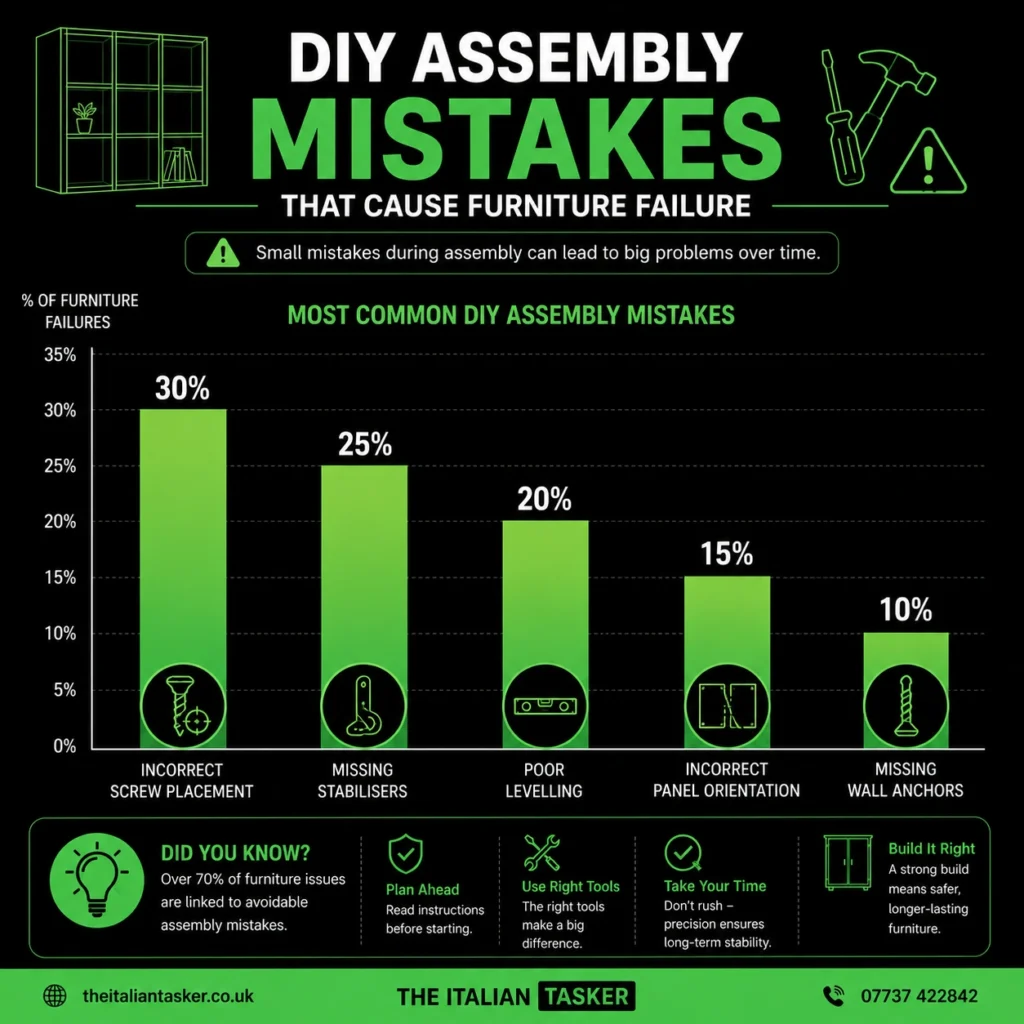
2. Skipping Important Steps
People frequently rush assembly because they become frustrated.
This leads to:
- Missing screws
- Incorrect panel orientation
- Loose connections
- Structural weakness
One skipped step early on can require complete disassembly later.
The Hidden Injury Risks Nobody Talks About
The physical risks are often overlooked.
Improper lifting can lead to:
- Lower back injuries
- Shoulder strains
- Neck pain
- Wrist injuries
- Knee strain
According to NIOSH, millions of non-fatal workplace injuries occur annually, with musculoskeletal injuries representing a substantial portion of manual handling incidents.
Even outside professional environments, the same principles apply.
Heavy furniture assembly requires:
Proper lifting techniques
Keep loads close to your body.
Team lifting
Some furniture is not designed for solo assembly.
Correct positioning
Work at waist height whenever possible.
Frequent breaks
Fatigue significantly increases mistakes.
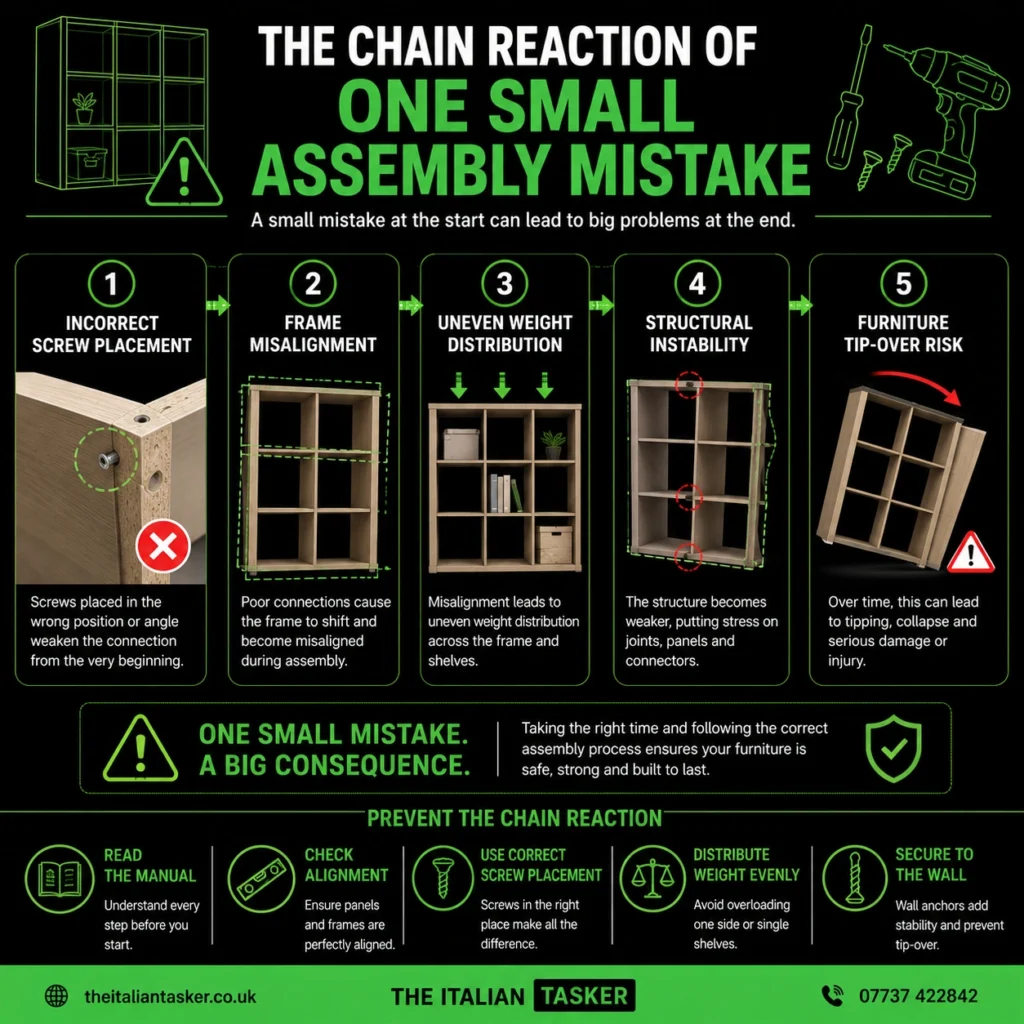
Furniture Tip-Overs Are More Common Than You Think
The biggest danger often appears after assembly.
Furniture that seems stable can become hazardous if assembled incorrectly.
According to the U.S. Consumer Product Safety Commission (CPSC), an estimated annual average of 17,800 emergency department-treated injuries occurred between 2020 and 2022 due to furniture and television tip-overs. About 82% involved furniture.
Even more concerning, children aged one to three years remain among the highest-risk groups.
Poor assembly often contributes to instability.
Common causes include:
- Missing anti-tip brackets
- Incorrect wall anchoring
- Misaligned frames
- Uneven flooring
This is particularly important for families with young children or pets.
Why Modern Furniture Is Becoming Harder To Assemble
Furniture manufacturers have increased storage capacity without increasing room footprints.
As a result, furniture is taller, wider and heavier.
Examples include:
Sliding wardrobes
Large mirror doors require precise alignment.
Modular storage systems
Multiple connection points increase complexity.
Multi-purpose furniture
Additional mechanisms create more failure points.
Large pieces now contain anywhere from 100 to 500 components.
Assembly is no longer simply “screws and panels.”
Precision matters.
The Time Cost Is Often Bigger Than The Financial Cost
Many people start assembling at 10 am expecting to finish by lunch.
Six hours later, they’re still sorting hardware.
A typical large wardrobe can take anywhere between 4 and 8 hours for inexperienced individuals.
This often includes:
- Unboxing
- Sorting components
- Reading instructions
- Correcting mistakes
- Rebuilding sections
The hidden costs include:
| Hidden Cost | Estimated Impact |
|---|---|
| Lost weekend time | 4–8 hours |
| Replacement parts | £10–£80 |
| Wall repairs | £50–£200 |
| Damaged flooring | £50–£300 |
| Injury treatment | Potentially significant |
Furniture Assembly Time Estimator
Estimate how long your flat-pack project will realistically take and check if you need backup.
*Estimates assume baseline manual tools. Using professional power tools correctly can shave off roughly 20-30% of the build duration.
Warning Signs That You Should Never Build Alone
Some projects should never be attempted solo.
Warning signs include:
More than two boxes
The furniture is likely too large.
Individual boxes exceed 25kg
Manual handling risks increase substantially.
Requires wall anchoring
Precision becomes essential.
Contains sliding doors
Alignment errors become expensive.
Exceeds 2 metres in height
Stability risks rise considerably.
When any of these conditions apply, professional assistance becomes a practical safety decision rather than a luxury.
Ready to get started? Contact The Italian Tasker today for all your handyman and furniture assembly needs in London. We’re here to make your life easier and your home more functional and beautiful.
Why Professional Heavy Flat Pack Assembly Makes A Difference
Experienced assemblers approach projects differently.
Instead of following instructions reactively, they anticipate structural challenges.
Professional heavy flat pack assembly London services understand:
- Weight distribution
- Structural integrity
- Safe lifting practices
- Furniture stabilisation
- Wall anchoring requirements
This reduces the risk of:
- Future collapse
- Property damage
- Costly repairs
- Personal injuries
Professional assembly is particularly beneficial for:
- Large wardrobes
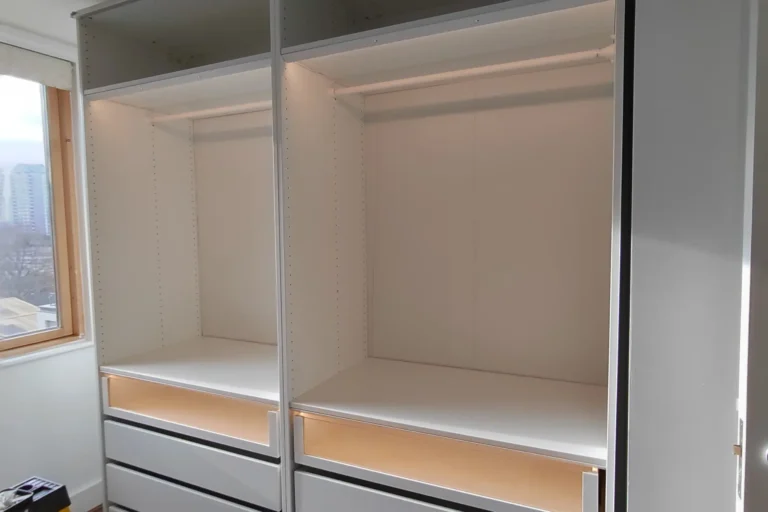
- IKEA PAX systems
- Home office furniture
- Commercial furniture
- Entertainment units
- Modular storage systems
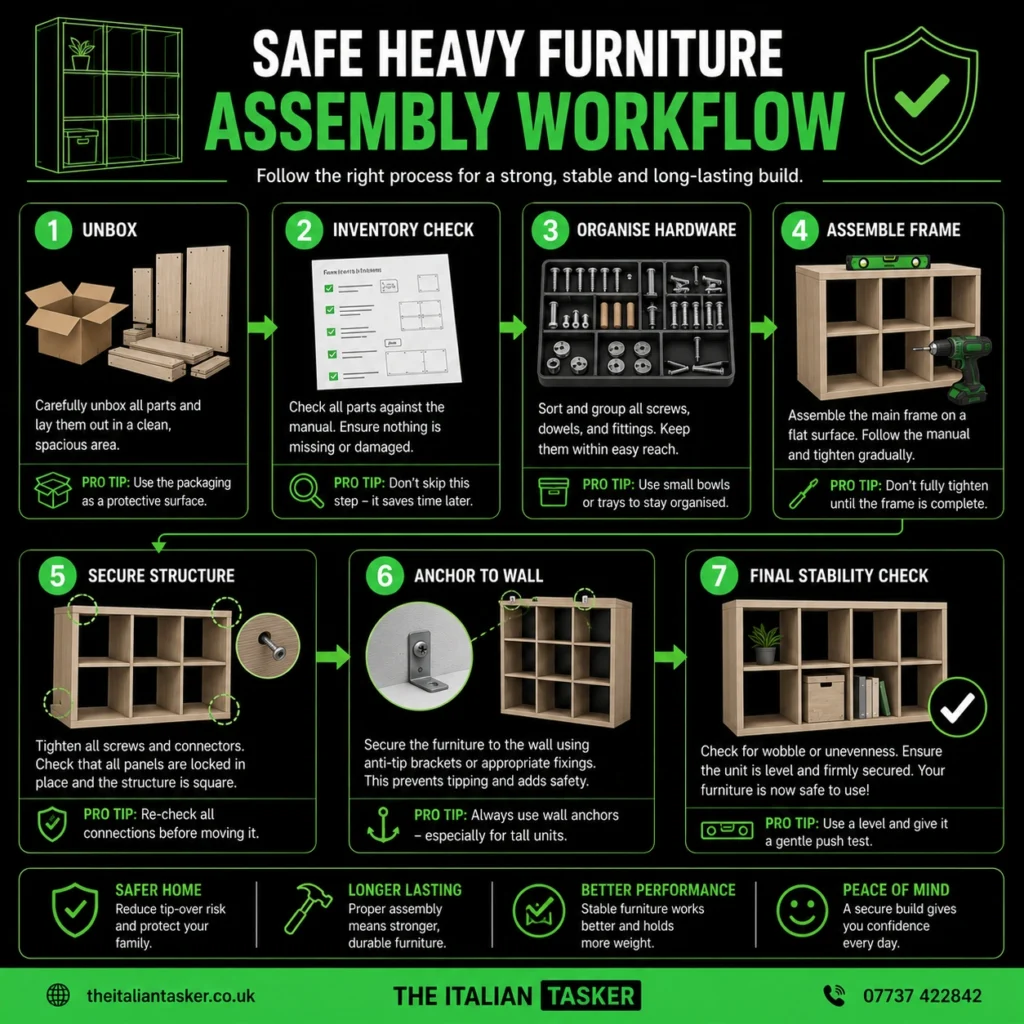
How To Prepare Before Any Heavy Furniture Assembly Project
Even if you’re confident, preparation is critical.
Follow this process:
Allow at least twice the furniture footprint.
Uneven floors affect stability.
Separate screws and brackets before starting.
Avoid building while learning.
Never lift large panels alone.
Is Saving A Few Pounds Worth The Risk?
Many people choose DIY because they believe it’s cheaper.
But when you factor in:
- Lost time
- Potential injuries
- Property damage
- Furniture replacement costs
- Future stability issues
The equation often changes.
Before tackling your next wardrobe, bookcase or entertainment unit alone, ask yourself:
Would you rather spend a few extra hours struggling with hundreds of parts, or have the peace of mind that your furniture is safe, stable and built to last?
What’s the biggest piece of flat pack furniture you’ve ever attempted to build by yourself, and would you do it again?
Ready to get started? Contact The Italian Tasker today for all your handyman and furniture assembly needs in London. We’re here to make your life easier and your home more functional and beautiful.
Frequently Asked Questions
1. Is building heavy flat pack furniture by yourself dangerous?
Yes, building heavy flat pack furniture by yourself can be risky, especially when assembling large wardrobes, bookcases, TV units, and sliding door storage systems. Heavy panels can cause back strain, falls, crushed fingers, or furniture instability if assembled incorrectly. Some pieces also require two people for safe lifting and positioning.
2. How heavy is heavy flat pack furniture?
Heavy flat pack furniture typically weighs between 50kg and 150kg once fully assembled. Large wardrobes, entertainment units, and modular storage systems often arrive in multiple boxes, with individual components weighing 15kg to 30kg each.
3. When should I hire a professional for heavy flat pack assembly in London?
You should consider professional heavy flat pack assembly in London when:
- The furniture comes in more than two boxes
- Individual boxes weigh over 25kg
- The furniture is taller than 2 metres
- Wall anchoring is required
- Sliding doors or mirrored panels are involved
- You don’t have a second person to help
Professional assemblers can safely install large furniture while reducing the risk of injuries and costly mistakes.
4. How long does it take to assemble heavy flat pack furniture?
Assembly times vary depending on the furniture type and complexity. On average:
Furniture Type | Estimated Assembly Time |
Chest of Drawers | 2-4 hours |
Office Desk | 2-3 hours |
Large Bookcase | 3-5 hours |
TV Unit | 3-5 hours |
Sliding Door Wardrobe | 4-8 hours |
Modular Storage System | 5-10 hours |
An experienced assembler can often complete the job significantly faster.
5. What tools are needed for building heavy flat pack furniture?
Most heavy flat pack furniture projects require:
- Screwdrivers
- Electric drill
- Allen keys
- Spirit level
- Rubber mallet
- Measuring tape
- Step ladder
- Wall anchors
- Safety gloves
Some manufacturers include basic tools, but professional-grade tools often improve accuracy and safety.
6. What are the most common mistakes people make when assembling heavy flat pack furniture?
The most common mistakes include:
- Skipping instruction steps
- Tightening screws too early
- Incorrect panel orientation
- Missing wall anchors
- Assembling furniture on uneven floors
- Attempting to lift heavy sections alone
These mistakes can compromise the furniture’s structural integrity and lifespan.
7. Do large wardrobes and bookcases need to be attached to the wall?
Yes. Large wardrobes, bookcases, and tall storage units should always be secured to the wall using anti-tip brackets provided by the manufacturer. This is especially important in homes with children and pets to prevent tip-over accidents.
8. Can incorrectly assembled flat pack furniture collapse?
Yes. Incorrect assembly can lead to instability, sagging shelves, loose frames, misaligned doors, and in severe cases, complete furniture collapse. Following manufacturer instructions and ensuring proper wall anchoring significantly reduces these risks.
9. Is professional heavy flat pack assembly worth it?
Professional assembly is often worth the investment because it saves time, reduces injury risks, prevents costly mistakes, and ensures furniture is assembled safely and correctly. It is particularly beneficial for large wardrobes, office furniture, and complex storage systems.
10. What furniture items are the hardest to assemble?
The most difficult flat pack furniture items include:
- Sliding door wardrobes
- IKEA PAX wardrobes
- Large entertainment units
- Modular storage systems
- Home office workstations
- Wall-mounted storage units
- Large bookcases
These pieces often require precise alignment, multiple lifting stages, and wall anchoring.