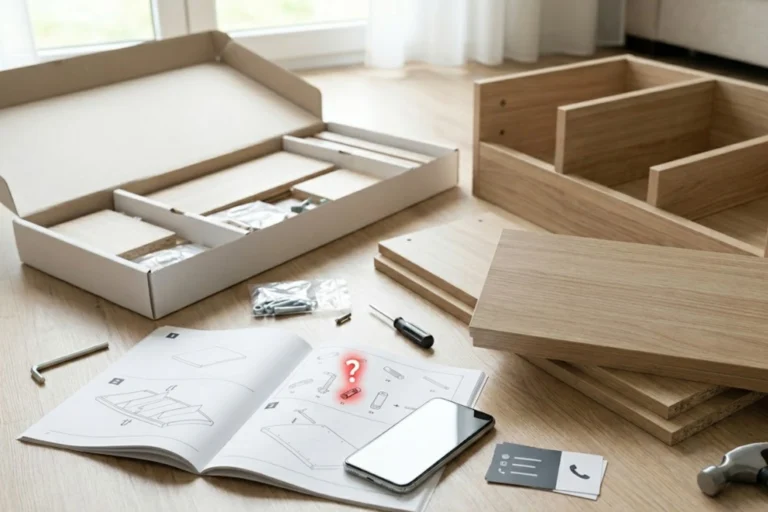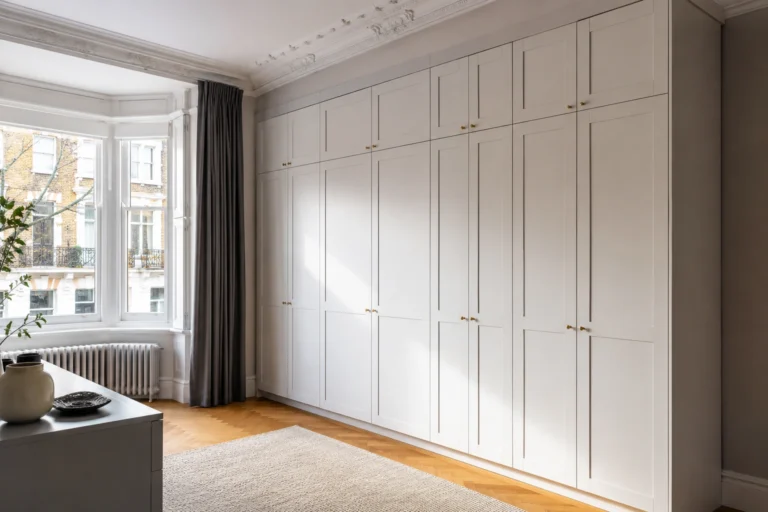
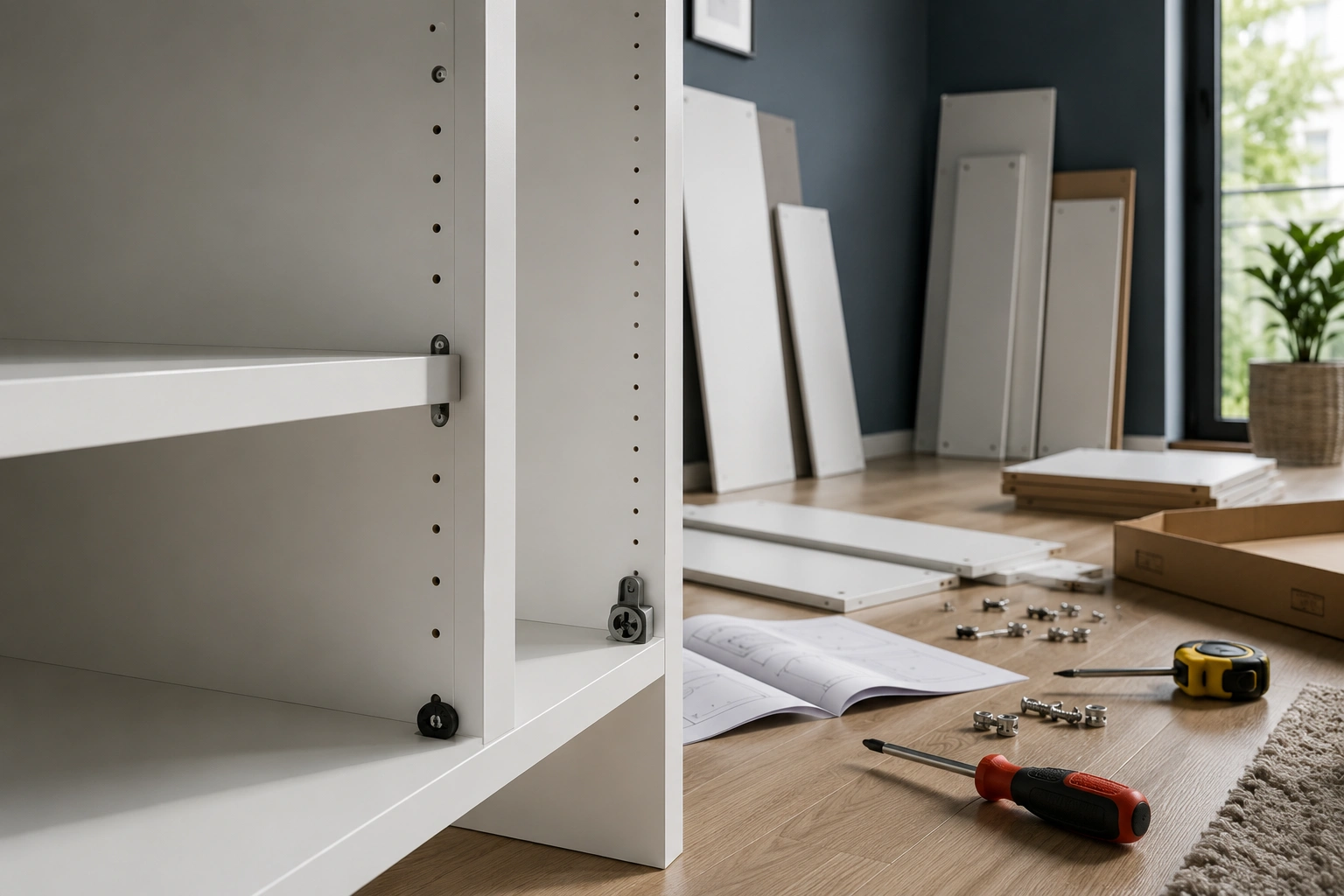
What a Professional Assembler Spots That You Won’t Until It Collapses
Flat pack furniture has become a normal part of modern living. It is affordable, stylish and convenient to transport. However, what looks perfectly assembled to the untrained eye can actually be a hidden safety hazard.
A professional flat pack assembler London homeowners trust doesn’t simply follow instruction manuals. They identify structural weaknesses, recognise incorrect fixings and spot dangerous installation mistakes long before they become expensive or dangerous problems.
Many furniture failures don’t happen immediately. They happen weeks or months later after repeated use, shifting weight, temperature changes and natural movement inside the home.
According to the U.S. Consumer Product Safety Commission (CPSC), thousands of people still require emergency treatment each year due to furniture tip-over incidents, with children and older adults facing the highest risks. Furniture instability remains a significant household safety issue.
This article explains the hidden warning signs professional assemblers identify that most homeowners miss completely.
Why Furniture Doesn't Collapse Immediately
One of the biggest misconceptions is believing that furniture either works or doesn’t work.
In reality, furniture failure is gradual.
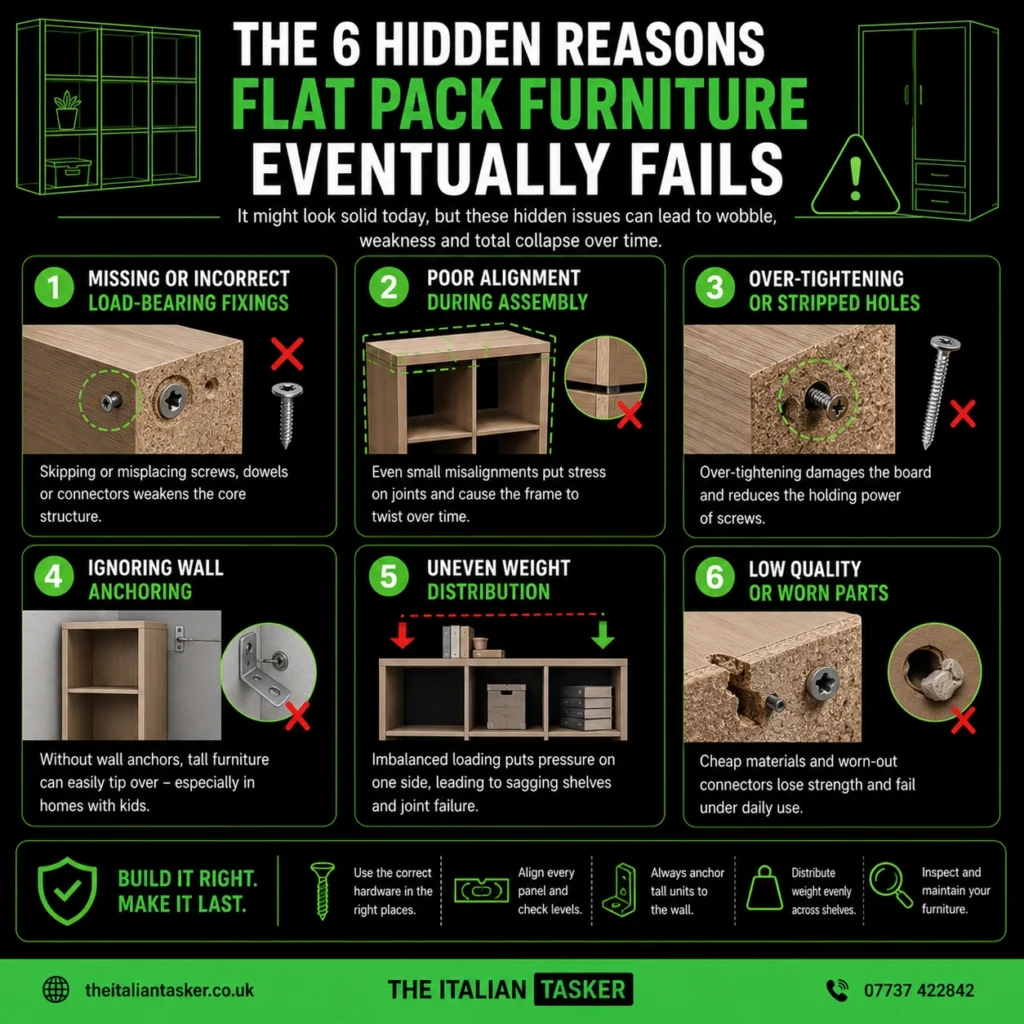
A wardrobe may appear perfectly stable on day one but slowly weaken over time because of incorrect screw tension, poor alignment or missing load-bearing fixings.
Professional assemblers understand that furniture is a dynamic structure. Every time someone opens a drawer, leans against a bookcase or places weight onto shelving, stress is distributed throughout the entire frame.
Tiny mistakes multiply over time.
Common delayed failure causes include:
| Hidden Issue | Immediate Appearance | Long-Term Result |
|---|---|---|
| Loose cam locks | Looks normal | Frame separation |
| Missing dowels | Slight wobble | Structural weakness |
| Incorrect screws | Feels secure | Joint failure |
| Uneven flooring | Slight tilt | Weight imbalance |
| Missing wall anchors | Stable initially | Tip-over risk |
| Overtightened fixings | No visible issue | Material cracking |
The First Thing Professionals Check: Weight Distribution
Professionals never start by tightening screws.
They first identify where the weight travels.
Every piece of furniture has primary support zones. These are the sections carrying the majority of the load.
Examples include:
- Wardrobe bases
- Bookcase centre shelves
- Drawer runners
- Bed support beams
- Wall-mounted shelving brackets
An untrained person often distributes heavy objects unevenly.
A professional identifies these pressure points immediately and reinforces them accordingly.
This is one reason why safe assembly is far more technical than simply following diagrams.
Hidden Alignment Problems Most People Never Notice
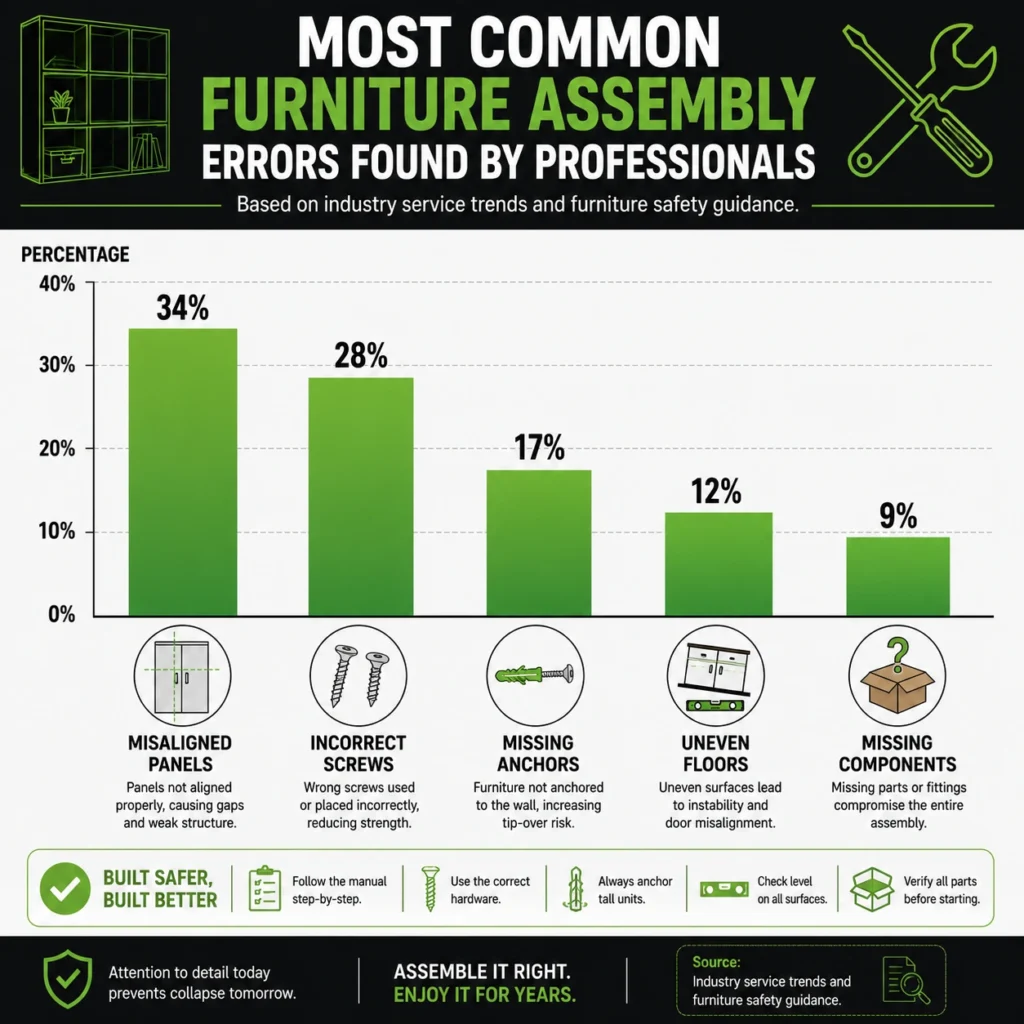
Furniture panels can appear aligned while being several millimetres out of position.
That tiny error matters.
Misalignment creates uneven stress distribution.
Professionals check:
Panel Squareness
They verify every corner sits at a true 90-degree angle.
Door Balancing
Wardrobe doors reveal structural issues quickly.
If one door closes faster or sits lower than another, the entire frame may be twisted.
Shelf Levelling
Shelves that appear straight can still place excessive pressure on side panels.
Professional assemblers use precision tools rather than relying on eyesight alone.
Load-Bearing Fixings Are Often Installed Incorrectly
Many people underestimate the importance of load-bearing fixings.
Not all screws perform the same function.
Professional assemblers instantly recognise:
| Fixing Type | Purpose | Risk if Incorrect |
|---|---|---|
| Wood screws | Structural support | Joint failure |
| Cam locks | Hold panels together | Furniture separation |
| Wall anchors | Prevent tipping | Complete collapse |
| Brackets | Weight reinforcement | Shelf detachment |
| Dowels | Alignment stability | Structural movement |
Even using a screw that’s just a few millimetres too short can compromise safety.
Professional installers inspect every fixing point individually.
The Dangerous Problem of Furniture Tip-Overs
Furniture tipping remains one of the most overlooked household hazards.
The CPSC reported an annual average of approximately 22,500 emergency department visits linked to furniture, TV and appliance tip-over incidents during recent reporting periods. Nearly 44% involved children under 18 years old.
Tall furniture is especially vulnerable.
This includes:
- Wardrobes
- Chest drawers
- Bookcases
- Display cabinets
Professional assemblers understand that furniture height changes the centre of gravity.
This is why wall anchoring is critical.
Wall Anchoring Is Not Optional
Furniture manufacturers and safety organisations consistently recommend securing tall units to walls.
Different wall materials require different anchors.
For example:
- Plasterboard
- Brick
- Concrete
- Timber studs
Using incorrect anchors creates a false sense of security.
Professional installers choose wall-specific fixings rather than generic hardware.
Professionals Test Furniture Before They Leave
Most homeowners stop once the furniture looks complete.
Professionals begin testing.
Dynamic Load Testing
They apply controlled pressure.
This simulates months of daily use.
Stability Testing
They check:
- Forward movement
- Side-to-side sway
- Joint flexing
Re-Torque Testing
Some fixings loosen after initial installation.
Professionals re-tighten critical connections after allowing the structure to settle.
This additional step significantly improves long-term durability.
Ready to get started? Contact The Italian Tasker today for all your handyman and furniture assembly needs in London. We’re here to make your life easier and your home more functional and beautiful.
Floors Are Often Responsible for Future Collapses
Even perfectly assembled furniture can become unstable.
The reason?
Uneven flooring.
Many UK homes have slight floor variations.
Professional assemblers use levelling methods to compensate.
Without adjustment:
- Doors become misaligned
- Weight shifts unevenly
- Fixings loosen faster
- Furniture begins to lean
A few millimetres of floor variation can significantly impact tall furniture over time.
Why DIY Assembly Instructions Aren't Enough
Instructions show assembly order.
They don’t teach structural behaviour.
They cannot account for:
- Uneven walls
- Different floor materials
- Weight distribution
- Property movement
- Occupancy habits
Professional experience fills these gaps.
Even advanced AI systems struggle with furniture assembly complexity.
Recent research published in 2026 found that advanced visual AI models still struggle with fine-grained furniture assembly reasoning and spatial understanding. Furniture assembly remains heavily dependent on human expertise.
Signs Your Furniture Wasn't Assembled Safely
Watch for these warning signs.
Visual Warning Signs
- Gaps between panels
- Doors that won’t align
- Drawers sticking
- Visible leaning
Audible Warning Signs
- Creaking noises
- Clicking sounds
- Grinding movements
Physical Warning Signs
- Side-to-side wobbling
- Movement when opening drawers
- Shelves sagging
Do not ignore these signs.
Furniture rarely collapses without warning.
Furniture Safety Risk Calculator
Evaluate structural tip-over dynamics and stability risks for your home environment.
*This digital model evaluates mechanical lever forces and architectural variables to estimate baseline risk tiers. It does not replace real-world structural validation.
Why Safe Assembly Is Becoming More Important Every Year
Homes are becoming smaller.
Furniture is becoming taller and more multifunctional.
People are also purchasing more flat pack products online than ever before.
This increases the importance of professional installation expertise.
What appears to be a simple wardrobe, shelving unit or chest of drawers is actually a load-bearing structure that requires precision.
The difference between a secure installation and a future collapse often comes down to details invisible to the average person.
If you walked around your home today, which piece of furniture would you trust the least if someone leaned against it unexpectedly? Share your answer and start a conversation about making homes safer.
Ready to get started? Contact The Italian Tasker today for all your handyman and furniture assembly needs in London. We’re here to make your life easier and your home more functional and beautiful.
Frequently Asked Questions
1. Why should I hire a professional flat pack assembler in London?
A professional flat pack assembler in London ensures your furniture is assembled safely, correctly, and according to manufacturer guidelines. They identify hidden structural issues, use the correct fixings, and secure furniture properly to reduce the risk of collapse, tipping, or premature damage.
2. How do professional assemblers make furniture safer?
Professional assemblers inspect weight distribution, install load-bearing fixings correctly, level furniture on uneven floors, and secure tall units to walls when necessary. They also perform stability checks to ensure long-term safety.
3. What are load-bearing fixings in flat pack furniture?
Load-bearing fixings are the screws, brackets, dowels, wall anchors, and support components responsible for carrying and distributing weight throughout the furniture. Incorrect installation can weaken the entire structure and increase the risk of failure.
4. Can poorly assembled furniture collapse over time?
Yes. Furniture may initially appear stable but can gradually weaken due to loose fixings, incorrect assembly, uneven weight distribution, or missing support components. Many collapses occur weeks or months after installation.
5. Which types of furniture are most likely to tip over?
Tall furniture pieces are at the highest risk of tipping over, including wardrobes, bookcases, chest drawers, display cabinets, and tall shelving units. These should always be properly secured, especially in homes with children or pets.
6. How long does professional flat pack furniture assembly take?
Assembly time depends on the complexity of the furniture. Small items may take 30 to 60 minutes, while larger wardrobes, office furniture, or multiple furniture pieces can take several hours to assemble safely.
7. What are the signs that my flat pack furniture was assembled incorrectly?
Common warning signs include wobbling, leaning, uneven doors, sticking drawers, unusual noises, visible gaps between panels, and furniture that shifts when touched. These issues should be addressed immediately.
8. Is wall anchoring necessary for flat pack furniture?
Yes. Wall anchoring is strongly recommended for tall furniture to prevent dangerous tip-over accidents. Professional assemblers use wall-specific fixings suitable for plasterboard, brick, concrete, or timber stud walls.
9. Is it cheaper to hire a professional furniture assembler instead of doing it yourself?
Hiring a professional can save money in the long run by preventing costly mistakes, damaged furniture, missing parts, and safety issues that may require repairs or replacements later.
10. What should I look for when choosing a professional flat pack assembler in London?
Look for an experienced assembler with verified customer reviews, insurance coverage, knowledge of safe assembly practices, experience with major furniture brands, and expertise in installing load-bearing fixings and wall anchors.