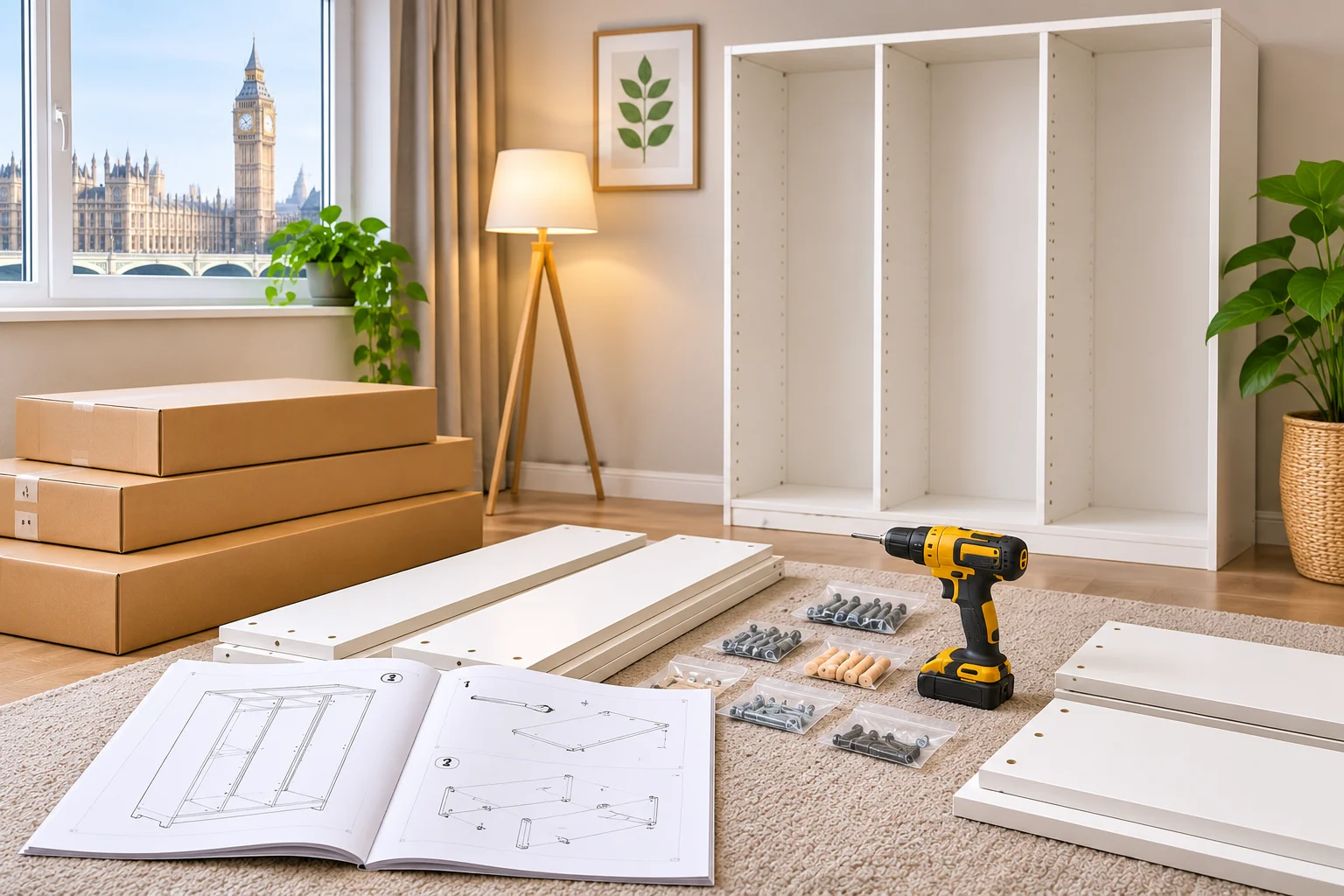
What IKEA Instructions Don’t Tell You About Flat Pack Furniture Assembly in London
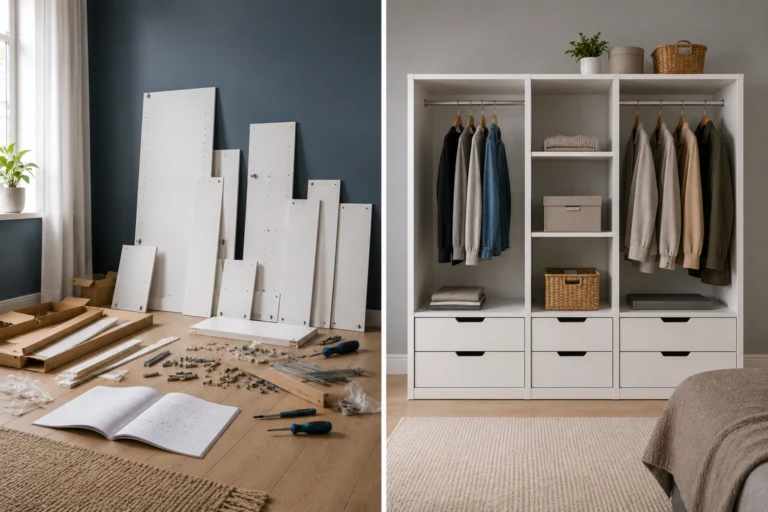
Buying flat-pack furniture looks simple until the boxes arrive. Flat pack furniture assembly London customers often discover that the instruction booklet explains how the product goes together, but not necessarily how the furniture should work within a real London home. Wall type, uneven floors, tight staircases, ceiling height and final positioning can all change the job.
IKEA‘s own guidance shows why this matters. For example, its PAX wardrobe information says that two people are needed for assembly and that the furniture must be fixed to the wall using suitable fixings for the wall material.
What IKEA Instructions Do Not Show You
IKEA manuals are designed to explain the product assembly sequence. They cannot know whether your London property has brick, plasterboard, stud walls, uneven flooring, narrow access or awkward positioning.
That difference is important. A wardrobe can be technically assembled correctly but still need levelling, adjustment or appropriate wall anchoring before it is genuinely ready for everyday use.
This is one reason professional flat pack furniture assembly in London involves more than simply following diagrams. The assembler has to understand the furniture and the room at the same time.
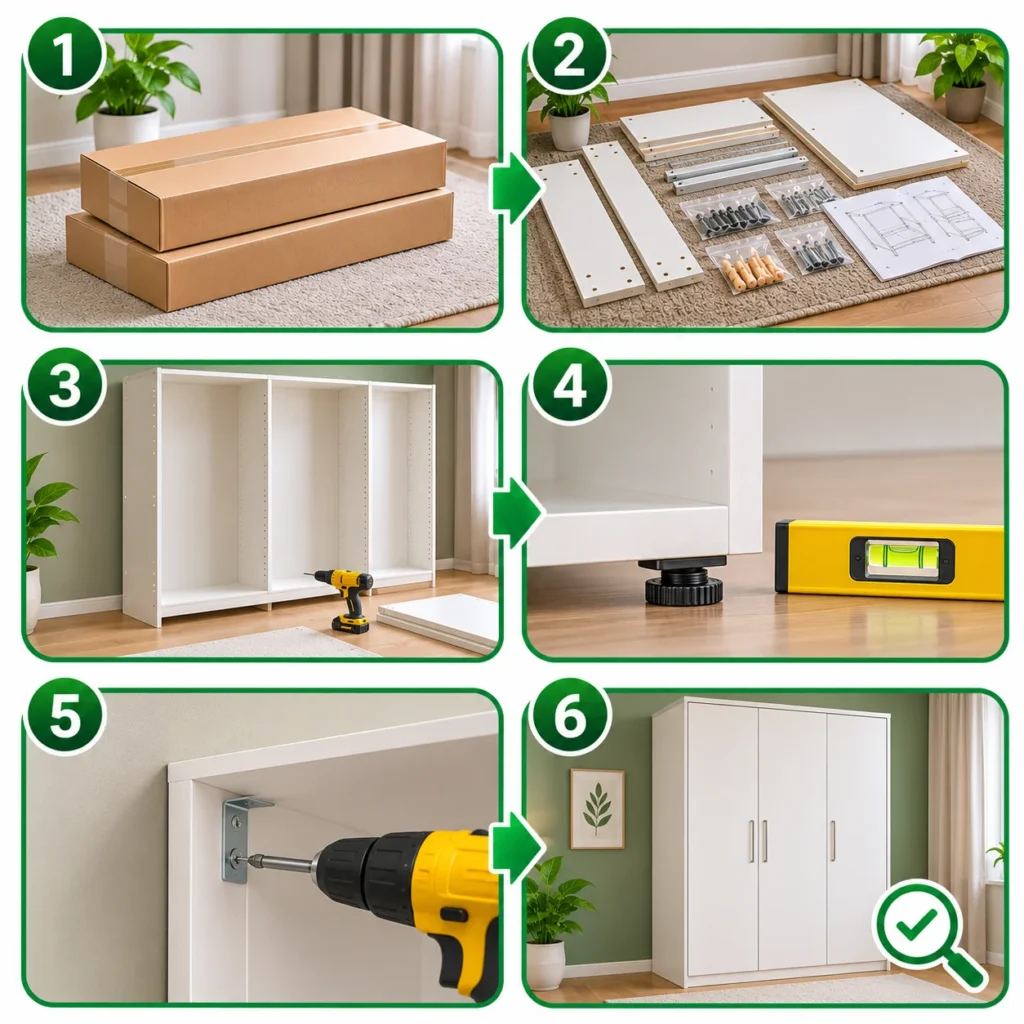
Why Your London Room Changes the Assembly
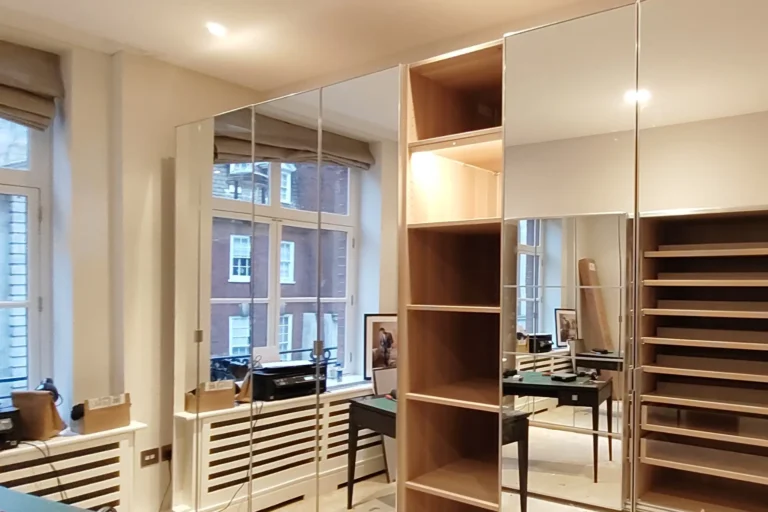
The same IKEA product can be straightforward in one property and difficult in another. A tall wardrobe may need careful planning around ceiling clearance, while a large bed frame may have to be assembled inside the bedroom because it cannot be manoeuvred through the finished doorway.
London properties can add further complications. Narrow staircases, lifts, parking restrictions, small bedrooms and older floors can affect how furniture is brought in, positioned and assembled.
IKEA specifically states that some PAX configurations have minimum ceiling-height requirements. One current PAX frame, for example, requires at least 202cm for upright assembly, while sliding-door configurations can require greater clearance.
That means measuring before delivery can prevent an expensive surprise later.
The Safety Step People Often Skip
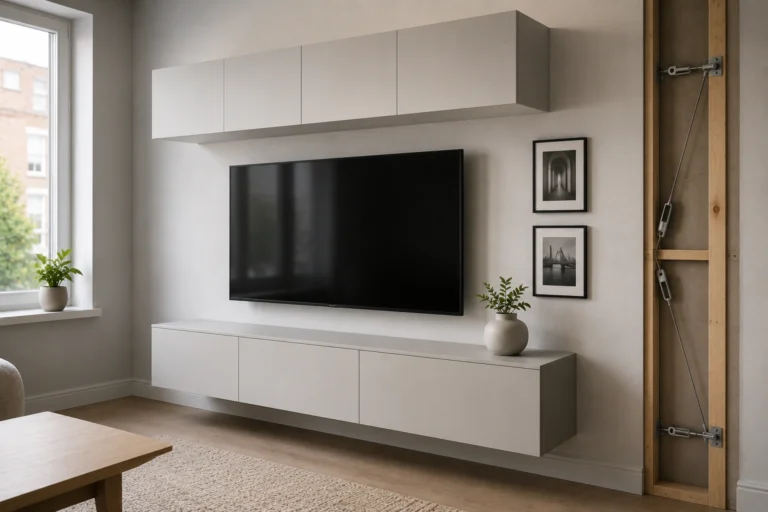
Wall anchoring is not an optional finishing touch for furniture where the manufacturer requires it.
IKEA advises customers to secure furniture to the wall to help prevent tip-over accidents. Its guidance also explains that different wall materials may require different screws and plugs.
The UK Government similarly advises consumers that heavy furniture should be attached to the wall to reduce the risk of tipping.
The important point is that flat pack furniture assembly in London is partly a safety task, not just a construction task. If you are unsure what fixing is suitable for your wall, professional advice is preferable to guessing.
Alignment Matters More Than Tightening Screws
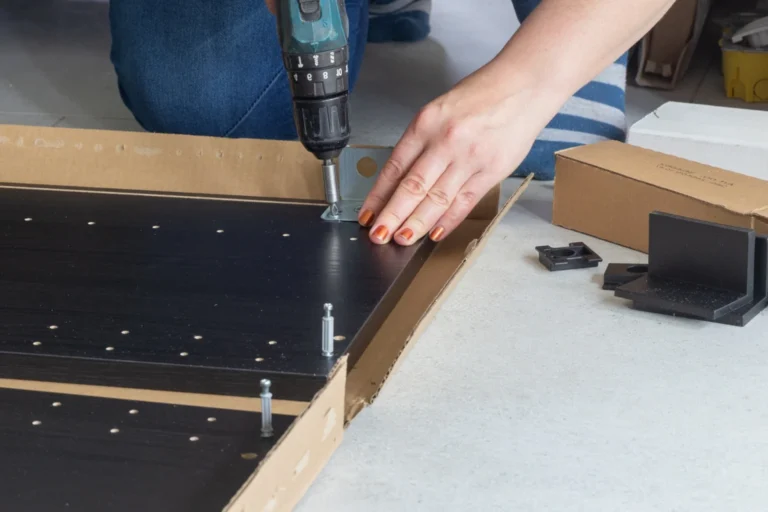
A common DIY mistake is assuming that tighter always means better.
Furniture needs to be square and correctly aligned before final tightening. If a wardrobe frame is slightly out of square, doors may sit unevenly, drawers can rub and sliding doors may fail to run smoothly.
This becomes particularly noticeable with PAX wardrobes and other modular systems containing several frames, doors and internal fittings. The Italian Tasker‘s London PAX service highlights alignment, smooth door operation, stability and uneven-floor adjustment as important parts of the finished installation.
A skilled flat pack assembler London customers hire should therefore check the finished furniture rather than simply reaching the final numbered instruction.
When DIY Assembly Becomes a Bigger Job
DIY makes sense for many smaller items when you have the time, tools and space to work comfortably. The calculation changes when the furniture is large, heavy, complicated or safety-critical.
A multi-door wardrobe, storage bed, tall shelving system or several-item home setup can involve hours of work. IKEA itself recommends at least two people for PAX assembly because of safety and potential product damage.
There is also the cost of getting something wrong. A misplaced fitting can mean partial disassembly, while damaged panels or incorrect drilling can create additional expense.
Professional flat pack furniture assembly in London services can be particularly useful when the priority is a correctly finished room rather than simply completing the instruction booklet.
What Professional Assembly Should Include
A proper assembly service should begin with understanding the furniture and the space. The quotation should make clear what is included, how many items are being assembled and whether positioning, wall fixing or packaging removal forms part of the service.
It is also worth asking about insurance, experience with the particular furniture type and what happens if a component is missing or damaged.
Current 2026 market guides show that London assembly pricing varies substantially according to furniture type, complexity, quantity and access. One UK guide places London and South East hourly rates around £45–£65, while individual-item prices vary according to the job. These figures are market benchmarks rather than official tariffs.
How to Prepare Before Assembly Day
Preparation can make the job faster and reduce avoidable problems.
Keep every box, fitting and instruction manual together until the furniture has been completely checked. Clear the assembly area, measure the intended position and make sure there is enough room to work safely.
If the furniture requires wall anchoring, identify the wall construction beforehand. In a rented property, also check your tenancy requirements before drilling.
Key Takeaways
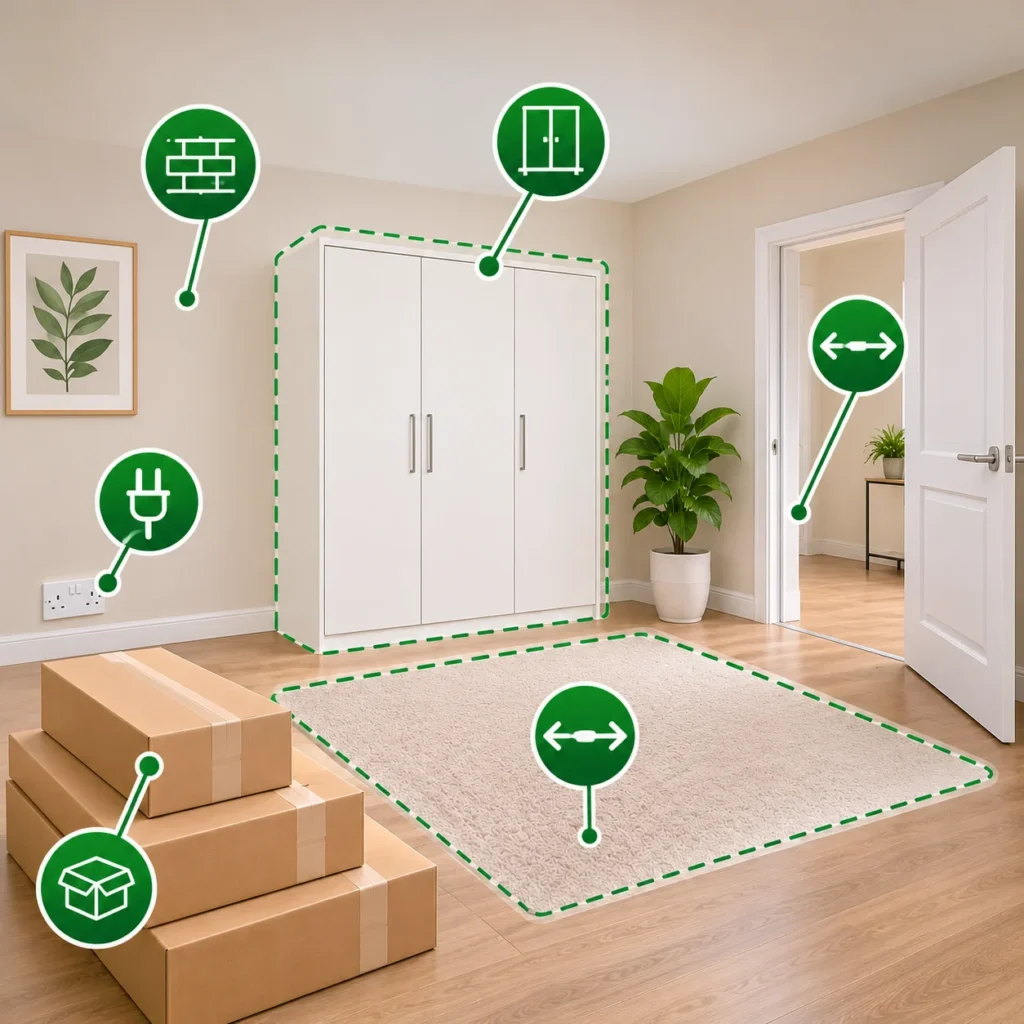
Good flat pack furniture assembly in London is about more than putting panels together. The final result depends on correct sequencing, alignment, floor conditions, access, wall fixing and careful adjustment.
IKEA‘s instructions remain the starting point, but the room itself introduces variables that a product manual cannot fully anticipate. For larger or more complicated furniture, an experienced flat pack assembler in London can take responsibility for those practical details.
Would you rather spend your weekend working through another flat-pack instruction booklet, or have your furniture properly assembled and ready to use?
Frequently Asked Questions
1. Is professional flat pack furniture assembly London worth it?
It can be useful when furniture is large, complex or difficult to handle safely. Professional assembly can also save time and reduce the risk of alignment, fixing or installation mistakes.
2. Can I assemble an IKEA PAX wardrobe alone?
IKEA recommends at least two people for PAX assembly for safety and to help avoid product damage. Large panels and frames can be difficult for one person to position accurately.
3. Does IKEA assembly include wall fixing?
The exact service depends on what you book, but the furniture itself may require wall anchoring. IKEA states that PAX furniture must be securely fixed to the wall using suitable fixings for the wall material.
4. What wall fixings should I use for IKEA furniture?
There is no single fixing suitable for every wall. Brick, plasterboard, timber and other wall constructions require different approaches, so follow the manufacturer’s guidance and obtain professional advice if you are unsure.
5. How much does flat-pack furniture assembly cost in London?
There is no official London-wide price because costs depend on the furniture, quantity, complexity and access. Current 2026 market guides show London hourly rates can be higher than elsewhere in the UK.
6. How long does IKEA furniture take to assemble?
Assembly time varies considerably by product and configuration. A small table may be relatively quick, while wardrobes with multiple frames, doors and internal fittings can take several hours.
7. Can uneven floors affect flat-pack furniture?
Yes. Uneven flooring can affect the stability and alignment of furniture, particularly tall wardrobes and units with doors or drawers. Adjustable feet or careful levelling may be required where the product allows it.
8. Should I keep IKEA packaging after assembly?
It is sensible to retain packaging and unused fittings until you have checked the completed furniture. This makes it easier to identify missing components or protect parts if something needs to be returned.
9. Can a flat pack assembler fix furniture I assembled incorrectly?
Often, a professional can identify the mistake, disassemble the affected section and rebuild it correctly. Whether this is possible depends on the extent of the error and whether any components have been damaged.
10. What should I check after furniture assembly?
Check that the furniture is level, stable and correctly positioned, and that doors, drawers and moving parts operate properly. Where wall anchoring is required, confirm that the furniture has been securely fixed using appropriate fittings.